

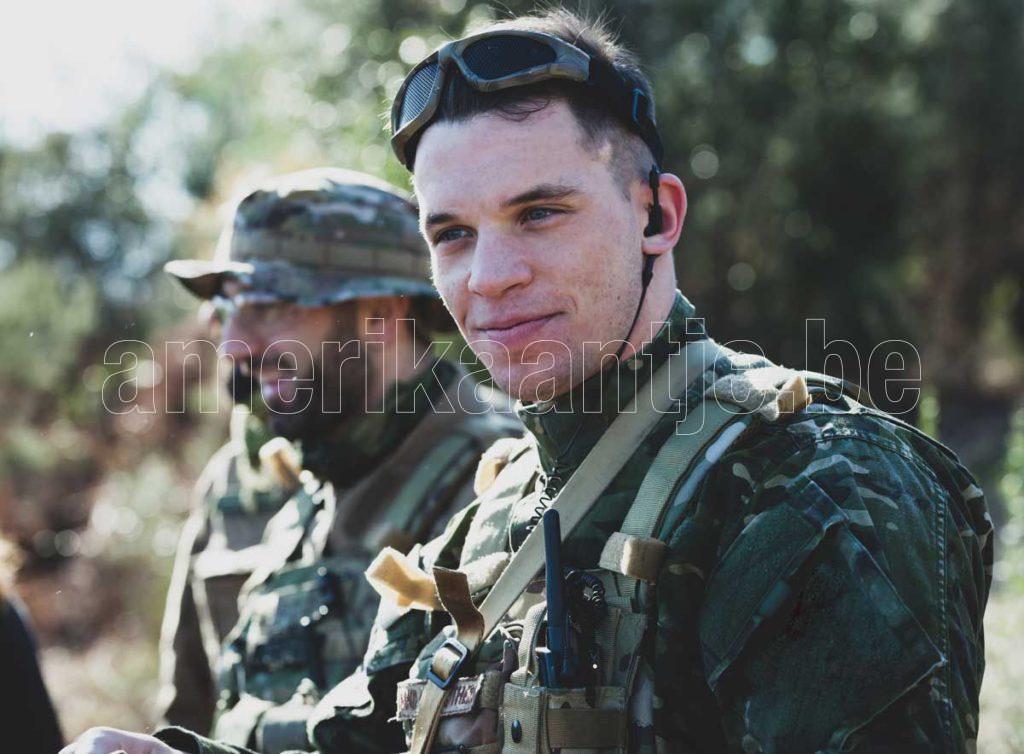
Camouflage patterns are popular in both military and civilian circles, albeit for completely different reasons. Whereas in the military, the aim is to stand out as little as possible, trendy girls and guys want just the opposite. But what do all these different patterns actually stand for? What is behind them and where do the designs come from?
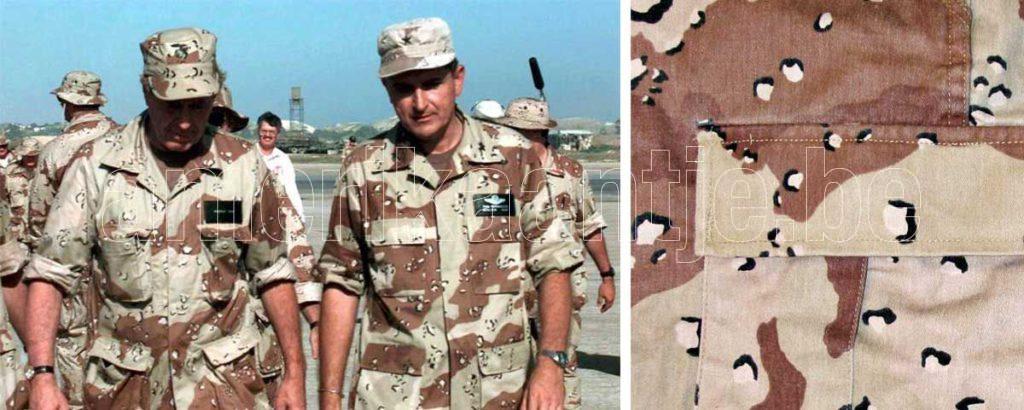
Chocolate flakes
The tastiest among camouflage patterns only gained fame fairly recently, notably during the Gulf War in the early 1990s. Yet the pattern had been around for much longer, since 1962 to be precise. The popularly called Chocolate-Chip or Cookie Dough camouflage was designed at the time - with the lingering Arab-Israeli conflict in mind - by the US army. After all, the Americans were of the opinion that one day they would have to intervene militarily in the Middle East. Accordingly, the pattern was first used in 1979 to protect US interests in the Persian Gulf region.
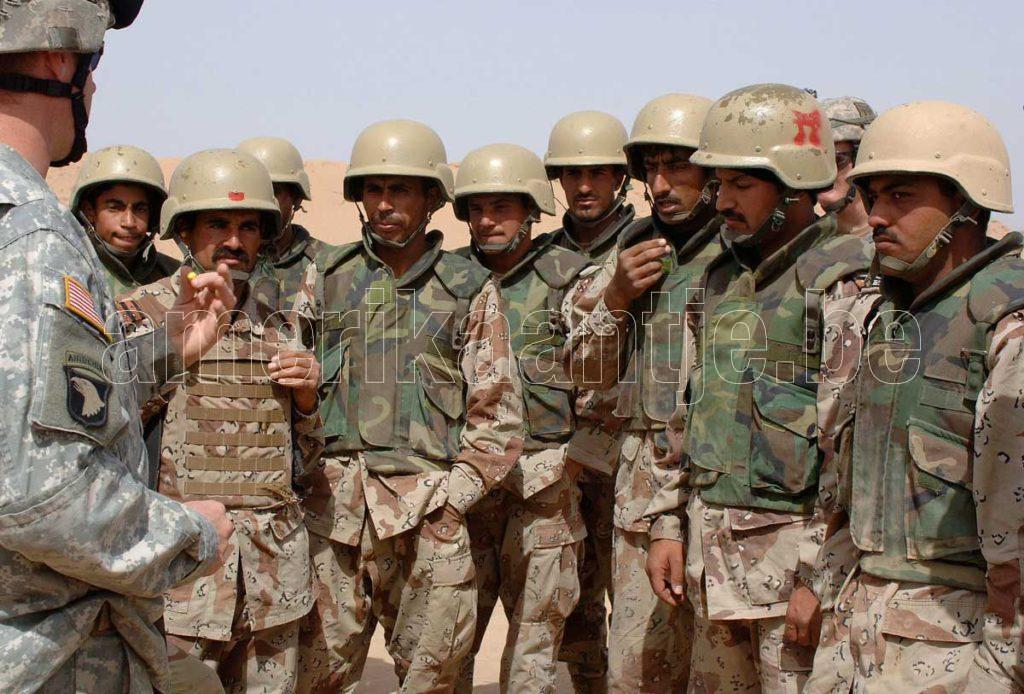
Today, this six-coloured camouflage, whose black print is reminiscent of chocolate flakes in biscuit dough, is no longer used by the US. However, a derived pattern is still widely used by other armed forces and security forces, such as the Palestinian police, who wear a blue variation.
Flecktarn
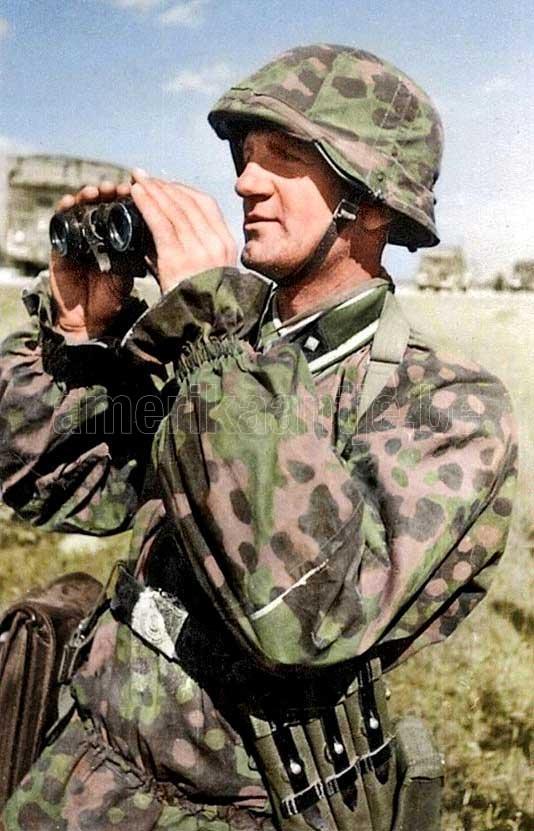
Flecktarn or 'spotted camouflage', like most popular camouflage patterns, has many variations. This type of camouflage is sometimes called the European Woodland (as a counterpart to the US Woodland), given its popularity and number of variations. Originally German, it was selected as the winner of a design competition in the mid-1970s.
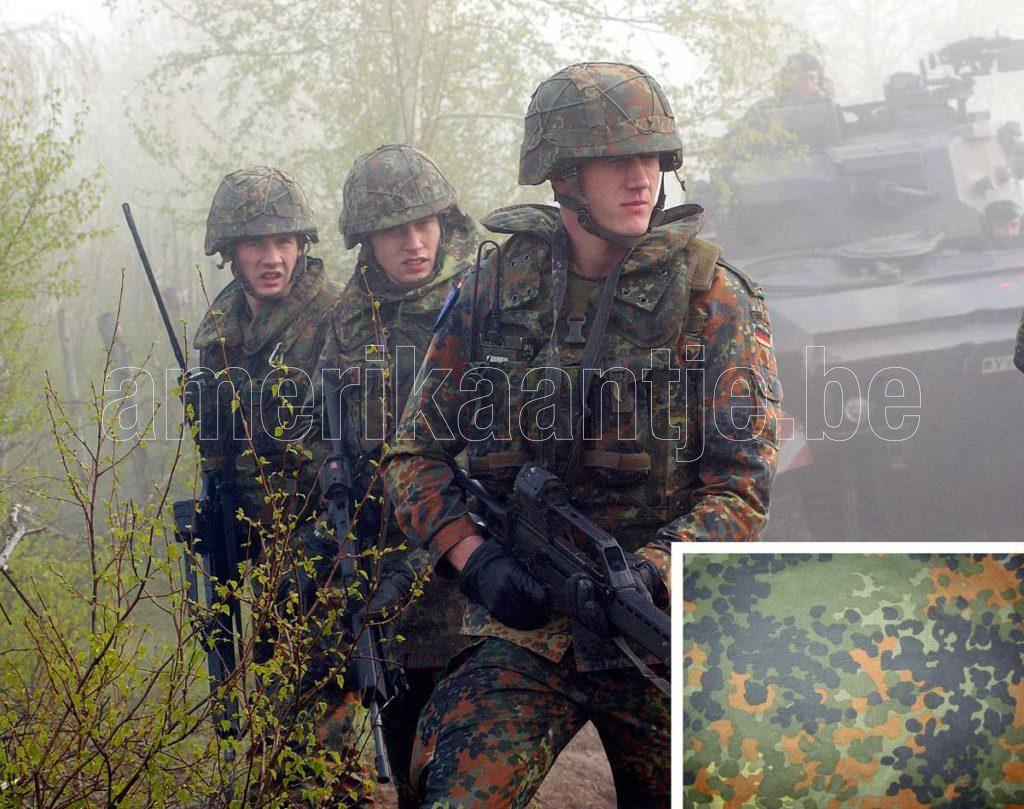
However, the pattern is not entirely without controversy. The Dutch army, among others, wanted nothing to do with Flecktarn because its appearance would be too aggressive. Moreover, there is a certain similarity to the Erbsenmuster pattern of the Waffen-SS, which consisted of 'peas' in four different colours. The Flecktarn pattern, which can be called rather controversial because of this, can consist of three, four, five or six different colours and is designed for use in a temperate wooded terrain.
Our Belgian air force, among others, has its own variant for infantry and ground personnel.
CADPAT/MARPAT
CADPAT, designed by the Canadian Armed Forces in 1996, was the world's first digital camouflage pattern. Traditional camouflage, such as the types mentioned above, use relatively large macro patterns that have clearly delineated contours and are more easily visible.
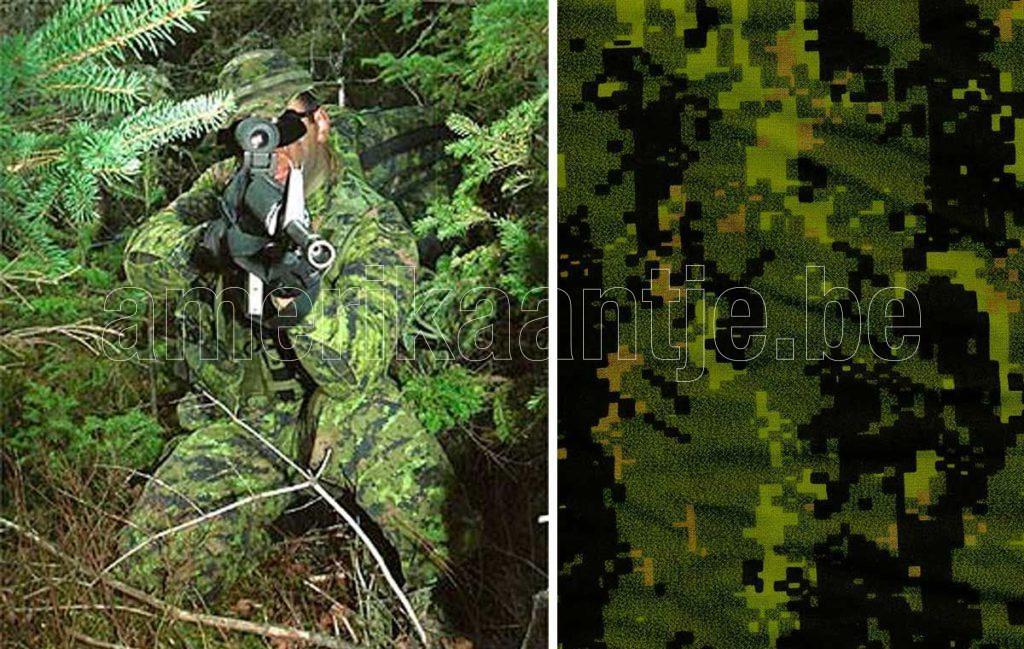
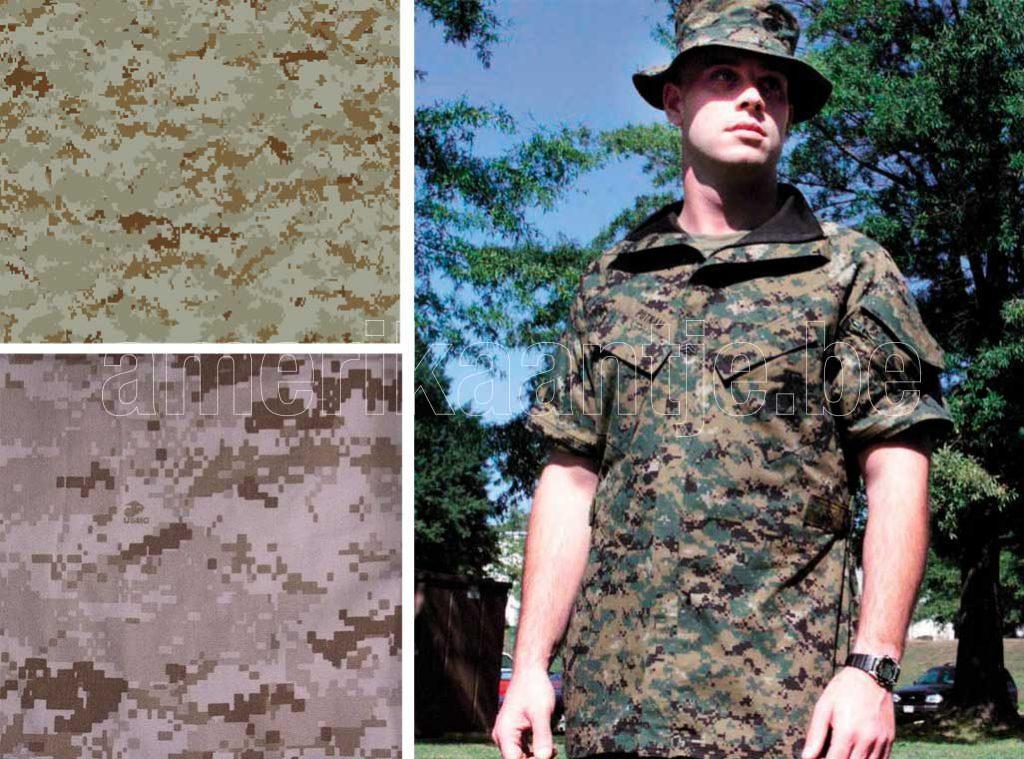
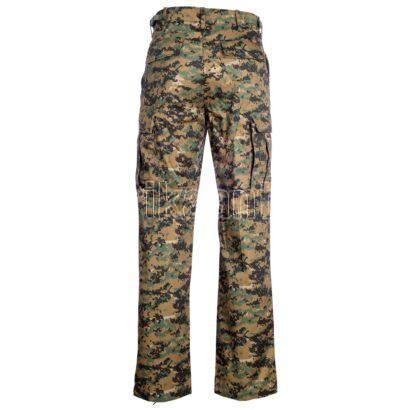
In contrast, digital camo uses pixelated micropatterns that fade together and appear to vibrate at a distance, making them harder to detect. This breakthrough revolutionised military camouflage and almost all modern armed forces have been using some form of pixelated camo ever since. MARPAT, for example, was the US Navy's first digital camouflage and was rolled out for all Naval forces in 2001. The colour scheme is very similar to the US Woodland pattern, which has been transformed into a pixelated micropattern. Although Marines will say they invented the pattern all by themselves, the influence of CADPAT is hard to deny.
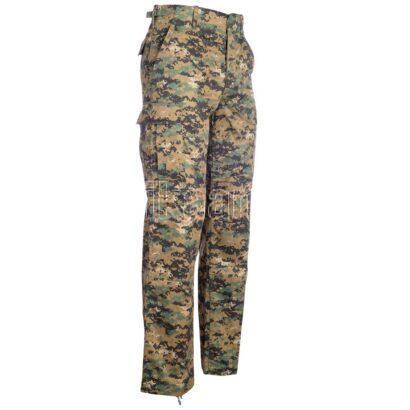
Military trousers

Rucksacks
Brushstroke
Brushstroke or 'brushstroke' camouflage is one of the first known camouflage patterns and is considered a fundamental predecessor of a lot of later designs. The pattern was originally devised by British paratroopers in World War II. They used literally large brushes ('brushes') with a washable paint to paint their keels - the Denison smocks - before jumping into enemy territory. A big advantage with this was that they could adjust the colours to suit the environment.
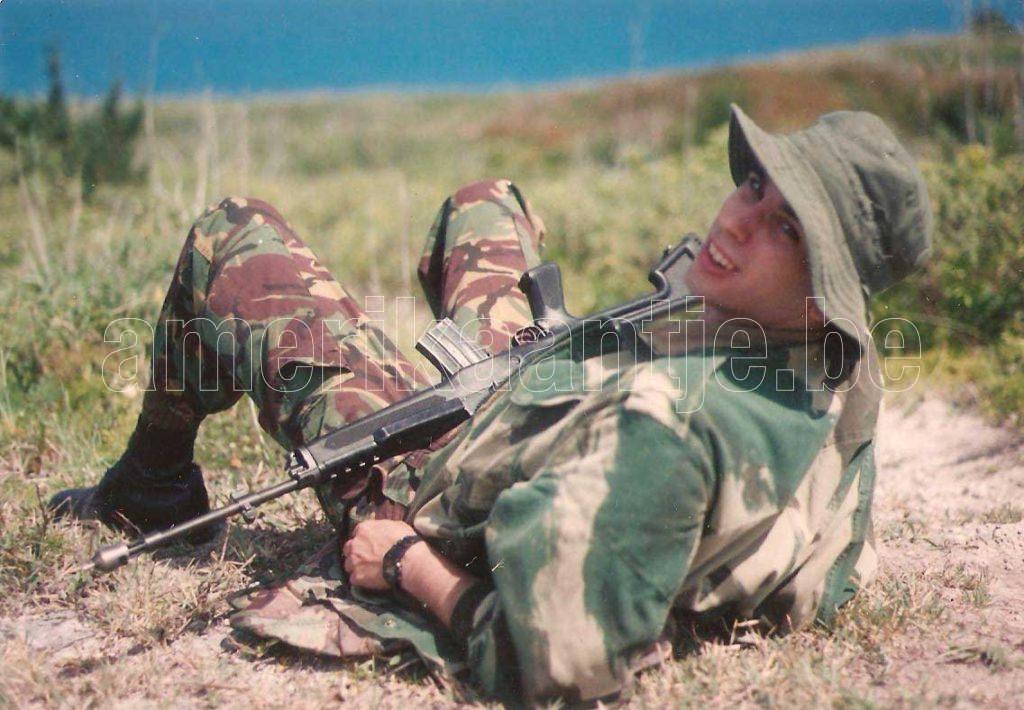
This type of camouflage was later also widely used by countries around the world, albeit using a screen printing process to apply the colours directly to the clothing. Each country made its own derivative, always typified by the distinct brushstroke style. Belgium and France showed it off in the 1950s, and in the 1970s a lot of Asian countries had their own - often colourful - variant.

 Nederlands
  Français
  English (UK)